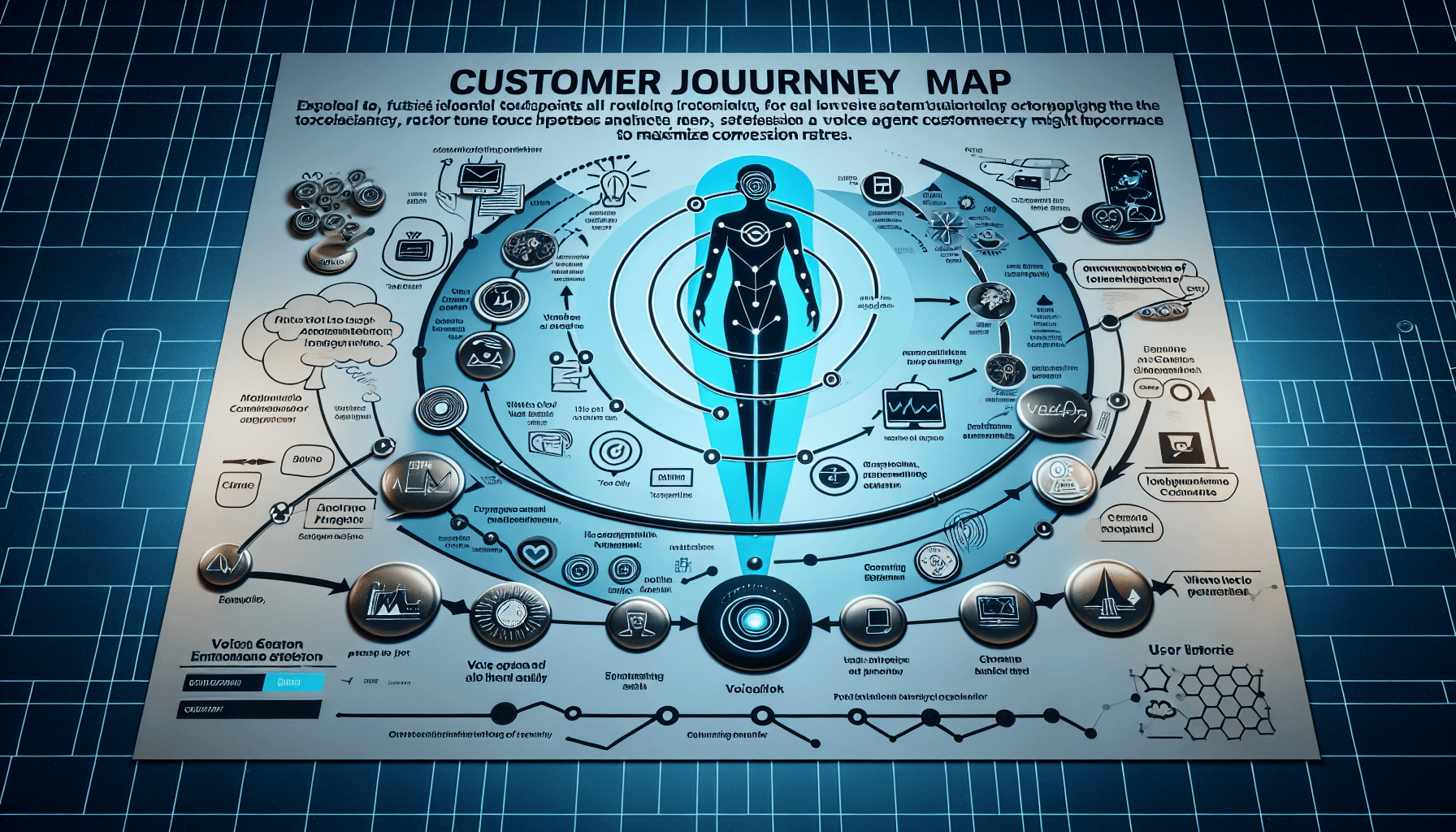
Customer Journey Mapping with AI – Automate & Optimise the Customer Journey
The customer journey – a customer's progression from first awareness of a product to loyal repeat custom – is rarely a straight line. It consists of dozens of touchpoints where customers come into contact with a company, make decisions, and have experiences. For German SMEs, the challenge is this: most of these touchpoints are served inconsistently, unstructured, and without systematic monitoring. AI Voice Agents offer the opportunity to automate, standardise, and continuously optimise critical points of the customer journey – without losing the personal touch that is so decisive in the DACH region.
What Customer Journey Mapping Means – and Why It Matters for SMEs
The Four Phases of the Customer Journey
The classic customer journey model divides the journey into four phases:
- Awareness: The potential customer becomes aware of the company – through recommendation, advertising, a Google search, or social media.
- Consideration: They examine alternatives, compare offers, and seek information.
- Decision: They make the purchase decision and enter into direct contact.
- Loyalty: They become a repeat customer, recommend the company, and increase their customer lifetime value.
A PwC study from 2024 found that 74% of German consumers said that a single negative experience is enough to switch to a competitor. At the same time, 88% of customers who had a consistently positive experience actively recommended the company.
Telephone contact plays a key role here: research shows that 56% of all German consumers still prefer to call rather than fill in a form or use a chatbot – particularly for more complex or urgent matters.
Customer Journey Mapping as a Strategic Tool
Customer Journey Mapping visualises all customer touchpoints, measures customer satisfaction at each point, and identifies so-called pain points – places where the customer experience is particularly negative. These pain points are the priority starting points for AI-powered automation.
A simple journey map template contains for each touchpoint:
- Customer action (what does the customer do?)
- Customer thoughts and feelings (what do they think/feel?)
- Company activity (what does the company do?)
- Pain points (where does it go wrong?)
- AI automation potential (can AI help here?)
AI Voice Agents at Every Touchpoint of the Customer Journey
Phase 1: Awareness – First Impressions Count
In the awareness phase, the telephone contact is often the first direct contact between prospect and company. The potential customer has typed in an initial search term, heard a recommendation, and now picks up the phone to learn more.
AI approach: An AI Voice Agent answers this first call within seconds – at any time of day or night. It greets the caller professionally, enquires about the matter, and provides initial information. Crucially: 78% of customers who do not immediately reach a human contact will call a different provider if their call goes into a queue or unexpectedly to voicemail.
An AI Voice Agent that responds immediately creates a professional first impression – and keeps the prospect in the conversation until either their matter is resolved or a qualified handoff to an employee is possible.
Measurable impact: Companies that use AI Voice Agents for the first contact report a 34% higher initial conversion rate (call → qualified lead).
Phase 2: Consideration – Building Information and Trust
In the consideration phase, the potential customer compares offers. They call to have specific questions answered: How long are the waiting times? What does the service cost? Is there an initial consultation?
AI approach: The AI Voice Agent acts as an informative first advisor. It answers frequently asked questions precisely and consistently – without employees having to repeat the same explanations over and over. It qualifies the prospect (what is the specific need? what budget is available? how urgent is the matter?) and prioritises the handoff to human sales employees.
An important aspect in this phase: consistency builds trust. AI agents always give the same, correct answer to the same question – without day-to-day fluctuations, without information gaps, without promises that cannot later be kept.
Phase 3: Decision – The Critical Moment
When a customer calls in the decision phase, purchase intent is high – but so is sensitivity to disappointment. A lengthy wait, an unclear answer, or an unavailable contact can still reverse the decision at this moment.
AI approach: In the decision phase, the AI Voice Agent takes on two critical functions:
Function 1 – Appointment booking: Prospects who are ready to book an appointment are guided directly and without detours into the calendar of the responsible employee. The booking completion rate rises because no form needs to be filled in and the commitment of an actual conversation is established immediately.
Function 2 – Intelligent handoff: When the prospect needs deeper advice, the AI Agent transfers the conversation with a complete conversation log and qualification data to the appropriate human employee. The employee is immediately informed and does not have to start from scratch – which increases the probability of closing by up to 40%.
Phase 4: Loyalty – Automatically Nurturing Repeat Customers
The most profitable phase of the customer journey is the most frequently neglected. Retaining existing customers is five to seven times cheaper than acquiring new ones – and yet most companies assume that repeat customers will come back on their own.
AI approach: AI Voice Agents can systematise customer care:
- Proactive callback campaigns: The agent actively calls existing customers after a service appointment, asks about satisfaction, and offers a next appointment
- Reminder calls: Automatic reminders for due maintenance, renewals, follow-up appointments
- Upselling conversations: The agent conducts brief, informative conversations about relevant additional services – based on the known customer profile in the CRM
- NPS surveys: Automated follow-up surveys after completed jobs
Companies that systematically conduct customer care calls with AI Voice Agents report 22–31% higher rebooking rates within the first 12 months.
Handoff to Human Agents: The Critical Interface
When the AI Should Hand Over
One of the most important design decisions in AI integration into the customer journey is the definition of handoff points. The AI should hand over to a human employee when:
- The caller explicitly asks for a human contact
- The matter is technically complex and requires individual expertise
- The caller is visibly becoming more emotional or frustrated
- It concerns a high-value customer (VIP status)
- Legal or compliance-relevant matters are being discussed
How to Make the Handoff Seamless
A seamless transition requires:
- Complete conversation summary: The human employee receives a real-time summary of the conversation so far, qualification data, and context – either as a CRM note or as a brief text display on the phone
- Warm handoff: The AI Agent informs the caller what happens next: "I'm connecting you now with our expert Mr Müller, who is already informed about your matter." This reduces the frustration of repeating information
- Clear escalation triggers: Define technically in advance which signal words or situations automatically trigger an escalation
NPS Improvement Through AI: Figures from Practice
The Net Promoter Score (NPS) measures how likely customers are to recommend a company. In German SMEs, the cross-industry average NPS is around 28. Companies that have optimised their customer journey with AI Voice Agents report NPS improvements of between 12 and 24 points within 12 months.
The drivers of this improvement:
- Higher availability: Customers always reach someone, whenever they call
- More consistent experiences: No quality difference depending on time of day or employee mood
- Faster problem resolution: Common matters are resolved immediately, without transfers
- Proactive care: Customers feel remembered and valued
Customer Journey Mapping in Practice: First Steps
Step 1: Create a Journey Map
Map all customer touchpoints – from the first Google result to the annual invoice. For each touchpoint, note what it currently looks like and what customer experience it creates.
Step 2: Prioritise Pain Points
Identify the three to five touchpoints with the highest frustration potential and the greatest revenue impact. Most commonly these are: first contact outside business hours, long waiting times, and missing follow-up after the first contact.
Step 3: Introduce AI Automation Gradually
Start with the pain point with the highest ROI potential. Implement the AI Voice Agent there, measure the impact, and expand step by step to further touchpoints.
Get Started Now
anicall.io supports you in developing your customer journey map and in the targeted integration of AI Voice Agents at the touchpoints with the greatest leverage. Start with a free consultation – and find out how your customer journey can be measurably better in 90 days.