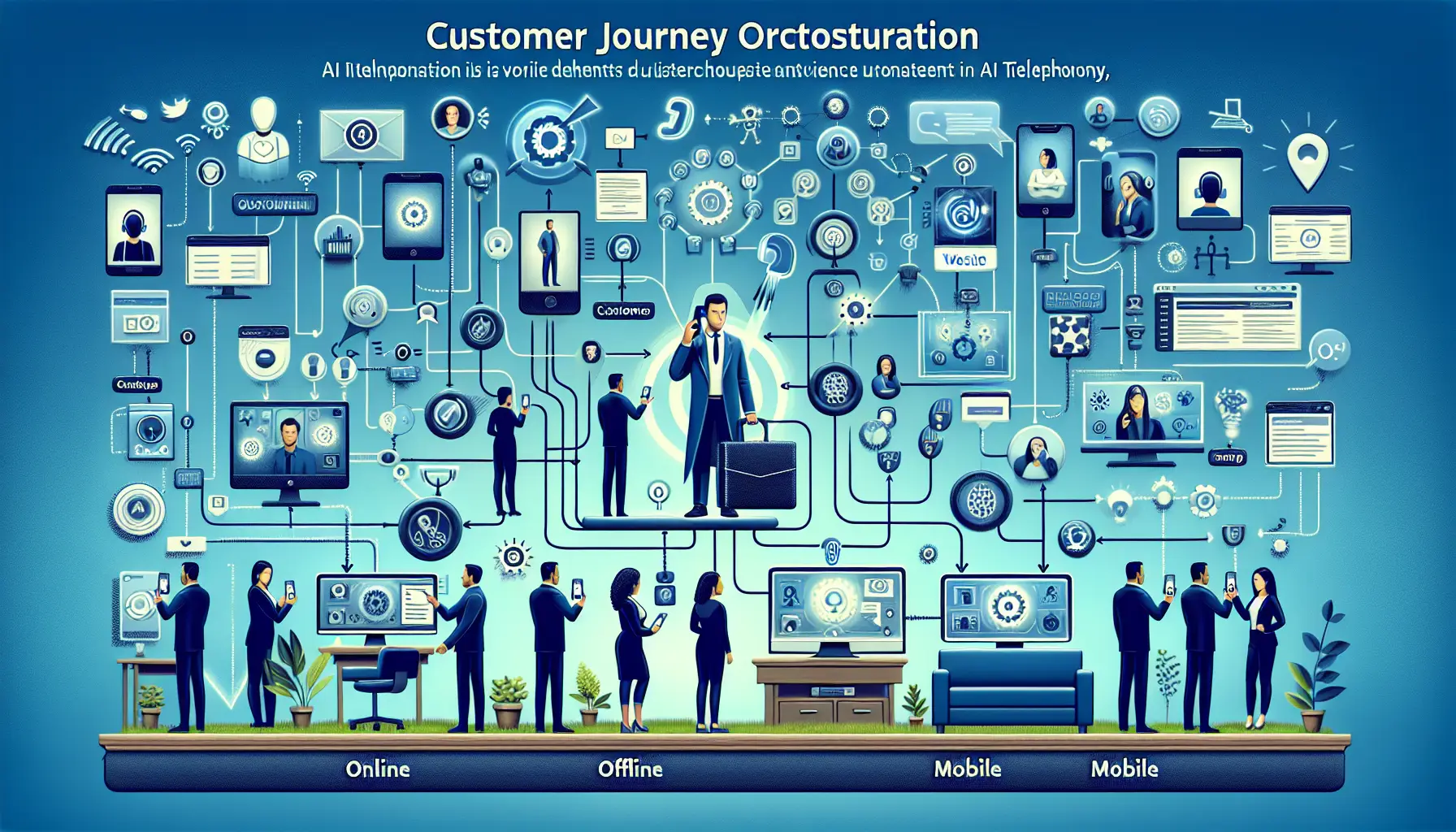
Omnichannel Customer Communication with AI – 24/7 Availability Without Staff Costs
Ms Weber sends a WhatsApp message on Monday, receives no reply until Tuesday lunchtime, and then calls – only to have to explain her matter all over again. No handoff, no context, no memory. This experience is everyday reality for many customers in the mid-market. It costs trust, time, and in the worst case the customer themselves. Omnichannel communication solves this problem – and AI makes it affordable and operationally manageable for SMEs.
What Customers Really Expect Today
Expectations of business communication have fundamentally shifted in recent years. Consumers who privately use WhatsApp, Instagram, and email in parallel no longer want channel silos. They expect a seamless experience: wherever they enquire, the company knows them and their context.
According to a Salesforce study (State of the Connected Customer 2024), 76% of customers expect consistent interactions across all channels. At the same time, 54% of respondents report feeling as though they are communicating with different departments rather than one unified company whenever they switch channel.
The problem is not lack of will – it is the lack of infrastructure. For large corporations with dedicated omnichannel platforms and large teams, this is manageable. For SMEs, it has until now been simply too complex and too expensive. AI changes this equation fundamentally.
The Voice Agent as Omnichannel Hub
A modern AI Voice Agent is not merely a telephone channel. It can function as a central communication hub that coordinates multiple channels and connects them with a shared customer database.
The principle: regardless of whether a customer calls, sends a WhatsApp message, or writes an email – all interactions land in a unified conversation history. The Voice Agent can access this data and knows what the customer has already communicated – regardless of channel.
This changes the quality of every conversation: when Ms Weber calls after sending a WhatsApp message yesterday, she does not need to repeat her matter. The agent says: "Good day, Ms Weber – I can see you asked about your order status yesterday. Would you like more information on that?" That is omnichannel in practice.
Channel Integration: Phone, WhatsApp, and Email
Phone as Primary Channel
For most SMEs, the telephone remains the most important incoming channel – particularly for more complex queries, emotional topics, and decision conversations. The Voice Agent answers calls 24/7, conducts structured conversations, and routes to human employees when needed.
The strength of telephone: directness and emotionality. Conversations build trust faster than text messages. A well-configured Voice Agent uses this strength and conducts even more complex conversations with high empathy.
WhatsApp Business API
WhatsApp has over 60 million active users in the DACH region. For many customers it is the preferred form of communication for quick queries. The WhatsApp Business API enables incoming messages to be processed automatically through AI:
- Instant responses to frequent questions (24/7)
- Booking confirmations and reminders via WhatsApp
- Document dispatch (quotes, invoices) directly in the chat
- Handoff to human employees for complex queries with complete chat history
Important: the WhatsApp Business API requires approval by Meta and a verified business account. For SMEs, this is easily achievable via platform providers such as anicall.
Email Integration
Email remains indispensable for formal communication, document dispatch, and B2B queries. AI-powered email processing can:
- Classify incoming emails (enquiry, complaint, order)
- Automatically generate and send standard responses
- Prioritise urgent emails and escalate to employees
- Enter conversation context from emails into the CRM
Integration with Voice Agent data means: when a customer sends an email enquiry and then calls, the Voice Agent knows the email context.
Context Preservation Across Channels: The Technical Foundation
The heart of omnichannel AI is a unified customer data model. All interactions – calls, chats, emails – are brought together in a central profile:
Customer profile (example):
- Name: Thomas Bauer
- Recent interactions:
  - 09.12.2025 14:32: Call (appointment booking, successful)
  - 10.12.2025 09:15: WhatsApp (question about directions, answered)
  - 10.12.2025 16:00: Email (request for callback about price)
- Open topics: price enquiry from email
- Booked appointment: 12.12.2025 10:00 am
When Thomas calls on 11 December, the Voice Agent immediately sees: there is an open price enquiry by email. It can proactively address this: "Mr Bauer, you sent an email about our prices yesterday – would you like to clarify something directly?"
This kind of proactive, context-aware communication is the difference between a transactional tool and a genuine customer relationship asset.
Handoff Between Channels: Seamless and Informed
When a query cannot be resolved automatically, the handoff to a human employee must be seamless. In an omnichannel architecture, this means:
- The employee sees the entire conversation history across all channels immediately on accepting the conversation
- No re-requesting of information the customer has already provided
- The employee knows the emotional context (frustrated customer? waiting a long time?)
- After human processing, results are automatically written back to the customer profile
This structured handoff reduces the average processing time for escalations by 25–35%, since employees do not waste time on information gathering.
Unified Customer History: Why This Is Decisive
A complete, cross-channel customer history has four strategic advantages:
1. Churn early detection: When a customer gives negative feedback across multiple channels within a short time, that is a clear warning signal. An AI system can recognise such patterns and automatically trigger an escalation or proactive outreach.
2. Upselling opportunities: Customers who regularly ask similar questions (e.g. about a particular product area) may be interested in an expanded offer. The unified history makes these patterns visible.
3. Personalisation: The more a customer interaction history contains, the more precisely communication can be tailored.
4. Compliance: A complete, structured communication history is also valuable for regulatory requirements – particularly in industries with documentation obligations.
Cost Savings vs. Channel-Specific Teams
The traditional approach to omnichannel would be: one team each for telephone, social media, and email. That is expensive, inefficient, and leads to the silo problems described above.
AI-powered omnichannel communication dramatically reduces staffing needs:
| Channel | Traditional approach | AI omnichannel | Saving |
|---|---|---|---|
| Telephone (500 calls/mo.) | 1 full-time employee | Voice Agent | €35,000–45,000/year |
| WhatsApp (300 messages/mo.) | 0.5 position | AI chatbot | €17,500–22,500/year |
| Email (200 emails/mo.) | 0.3 position | AI email processing | €10,500–13,500/year |
| Total | 1.8 positions | AI platform | €63,000–81,000/year |
Compared to typical platform costs of €800–2,500 per month, the annual saving is €55,000–75,000 – with simultaneously better availability and consistency.
Implementation Roadmap: How SMEs Get Started
Building a complete omnichannel system does not have to happen all at once. A realistic roadmap for SMEs:
Phase 1 (months 1–2): Telephone foundation Set up Voice Agent for incoming calls, build CRM integration, activate conversation history. Achieve quick wins and build confidence in the technology.
Phase 2 (months 3–4): WhatsApp integration Activate WhatsApp Business API, configure AI responses for frequent queries, activate cross-channel history. Inform customers about the new channel.
Phase 3 (months 5–6): Email automation Set up email classification and automatic responses for standard queries. Define escalation processes for complex queries.
Phase 4 (from month 7): Optimisation and expansion Analytics review, optimisation of conversation flows, opening up further channels (e.g. website chat), proactive communication based on customer data.
This step-by-step approach minimises risk and enables learning from phase to phase.
GDPR Compliance with Omnichannel Data
Bringing together customer data from different channels places special requirements on data protection:
- Consent for each channel: When customers communicate via WhatsApp, clear information about AI processing is needed
- Purpose limitation: Data from one channel may only be used for defined purposes in other channels
- Right of access: Customers can request to see all stored data across all channels
- Deletion periods: Channel-specific data must be deleted after defined periods
A GDPR-compliant omnichannel platform manages these requirements automatically and ensures that compliance does not remain an operational burden.
Conclusion: Omnichannel Is Customer Loyalty
Customers who have seamless cross-channel experiences are more loyal, buy more, and recommend the company more frequently. AI makes this experience affordable for SMEs – without large teams, without complex IT projects, without months of implementation times.
Getting started is simpler than many think. And those who start today build a customer loyalty advantage that grows stronger with every further interaction.
Find out how anicall enables your omnichannel entry – from the first telephony integration to full channel networking. Book your consultation now at anicall.io.